Strategy · Risk · Geopolitics · Systems

Ordering

How Systems Reprice
When Failure Becomes Expensive
“A better offer can still lose the file.”

ORDERING examines how systems reprice actors, authority, dependencies, and decisions as failure cost rises—and how their own priorities may shift to protect continuity, reversibility, and viability.
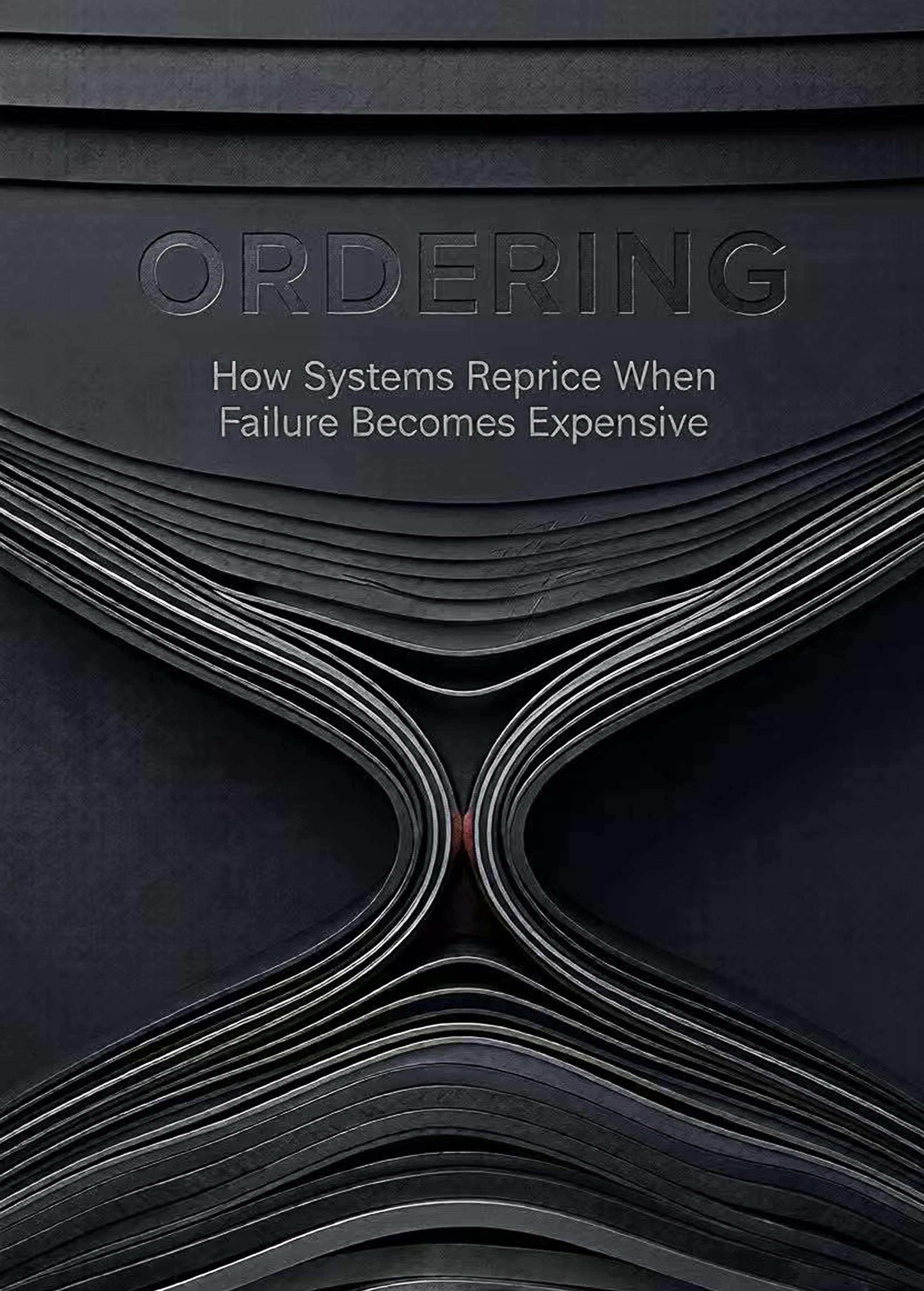
Ordering by Cornor Reed book cover
The Book’s Operating Chain
Constraint
→
Pressure
→
Firmware
→
Decision Stack
→
Decision Drop
→
Reclassification
→
Managed Variable
→
Deep Time

The book's operating chain traces how constraint and pressure become encoded in response logic, how decisive weight shifts beneath visible procedures, and how actors and dependencies are reclassified. Deep Time, the book's long horizon, extends the analysis across cycles, where earlier failure costs and classifications continue to shape future choices.

Most analysis begins too late.

It begins with ideology, culture, rhetoric, or declared values. But under pressure, systems calculate from somewhere colder. They calculate from failure cost.

A structural language for what you are seeing.

Ordering is for readers who already suspect this. It provides a framework to read the moves that happen before the announcement — and after the handshake.

Recognize the Signals
01
When delay becomes repricing.
02
When cooperation persists after the logic has already shifted.
03
When a file, partner, or asset is reclassified before anyone says no.
More signals follow inside the framework
Written For
Executives
Investors
Strategists
Risk Officers
Cross-Border Operators
Policy Analysts

Also for thinkers, observers, and participants interested in systems, structure, organizations, operations, risk, and the quiet mechanics of institutional behavior.

Core Entry Points / Archive / Category Archives

Core Entry Points

Six core entry points connecting ORDERING’s research identity, foundational statements, framework, navigation resources, and research archive.

01ORDERING HubThe central gateway to the ORDERING research and publishing system. 02ORDERING Start HereAn introductory entry point for readers new to ORDERING. 03What ORDERING Seeks to Answer — Author’s StatementThe author’s statement on the questions, purpose, and intellectual direction of ORDERING. 04ORDERING Framework OverviewA concise introduction to the framework’s core proposition, diagnostic architecture, and research structure. 05ORDERING Framework Micro IndexA guided navigation map to the ORDERING research materials, modules, and reading paths. 06ORDERING Research Archive — ZenodoThe permanent research archive for ORDERING publications, DOI records, and citable materials.

ARCHIVE

ORDERING Framework Micro Index

A guided navigation map to the ORDERING research materials, modules, and reading paths.

ORDERING Research Archive — Zenodo

The permanent research archive for ORDERING publications, DOI records, and citable materials.

CATEGORY ARCHIVES

The category archives separate the framework into papers, applied briefs, case notes, concepts, tools, and visual assets & diagnostic tools.

Papers

The theoretical and analytical foundation of the ORDERING Framework.

Applied Briefs

Practical applications of ORDERING concepts to institutional, regulatory, organizational, and strategic contexts.

Case Notes

Case-based readings of shifts in decision logic, trust structure, failure cost, exposure, or carrying rules.

Concepts

Reference entries defining core ORDERING terms and mechanisms.

Tools

Diagnostic methods and structured tests for applying ORDERING concepts.

Visual Companions

Figures, maps, diagnostic cards, assessment sheets, and visual reference materials for explanation, teaching, citation, and public communication.

Author & Research Profiles

Cornor Reed

Independent Author

Author of ORDERING: How Systems Reprice When Failure Becomes Expensive

Developer of the ORDERING Framework

ORDERING — An independent research and publishing project examining how systems reprice actors, authority, dependencies, and decisions as failure cost rises—and how their own priorities may shift to protect continuity, reversibility, and viability.

Researcher Identity
Research Profiles
Research Archives
Open Research Resources
Publications & Professional Profile

When failure becomes expensive, systems may change what they protect, prioritize, and permit.

Now you have the language to see it.